Add Up The Stars: Level 2 Is The Lowest-Rated Tier On This Card
“Save Time with Claude. Welcome to Claude Maxxing.” Three stacked tiers, each with a name, a payoff and six feature tiles. Level 01 is CHAT, payoff Context. Level 02 is COWORK, payoff Hours. Level 03 is CODE, payoff Autopilot. The caption makes the pitch explicit: “95% of Claude users stop at Chat… the 5% who don’t stop there get 10+ hours back every week.”
It is a ladder, and ladders are persuasive because they imply that the thing above is better than the thing below. This one puts a number on that claim, which is unusual and generous: every single tile on the card carries a star rating out of five.
So we added them up.
The source card — “Save Time with Claude”, BANI Academy. Three levels — Chat, Cowork, Code — eighteen feature tiles, each star-rated, each with a one-line route to switching it on.
The middle rung is the lowest-scoring tier on the card
Average the six tile ratings inside each level and the ladder stops going up:
| Level | The tier’s own badge | Its six tiles | Mean tile rating | The gap |
|---|---|---|---|---|
| 01 — CHAT | ★★☆☆☆ (2) | 4, 4, 4, 4, 3, 4 | 3.83 | Rated +1.83 above its own header. The card scores Chat’s features far higher than it scores Chat |
| 02 — COWORK | ★★★★☆ (4) | 3, 3, 4, 3, 3, 4 | 3.33 | Rated −0.67 below its own header — and below Level 1’s tiles |
| 03 — CODE | ★★★★★ (5) | 4, 3, 4, 5, 4, 4 | 4.00 | Rated −1.00 below its own header. The only tier whose tiles beat Level 1 |
Two things fall out of that, and the second is the interesting one.
First: the headers were not derived from the tiles. If they had been, Chat would be a four and Cowork would sit below it. The header stars are the story — two, four, five, a tidy climb. The tile stars are the assessment, done feature by feature, and they tell a different story. Where a card rates the same thing twice at two altitudes, the granular rating is usually the honest one, because it was made while looking at something specific.
Second: Chat is rated two stars while five of its six features are rated four. Memory. Instructions. Projects. Skills. Ask-before-assuming. Those are not consolation prizes for people who have not levelled up — by the card’s own scoring they are among the best things on the page, and every one of them is a settings toggle that takes about two minutes.
The ladder tells a beginner that Chat is a room to escape. The stars inside the ladder say Chat is where most of the available value is sitting, unswitched-on.
Diagram: the real ladder is dependencies, not skill
If the levels are not ordered by how good the features are, what are they ordered by? Read the small print under each tile — the line telling you how to switch it on — and the answer is immediate. The tiers are sorted by how many things you have to own before the tile does anything.
| Tile | Level | ★ | What it needs before it works |
|---|---|---|---|
| Memory | 01 | 4 | A settings toggle. Settings → Capabilities → Memory ON |
| Instructions | 01 | 4 | A settings field. Settings → Personal preferences |
| Projects | 01 | 4 | Nothing. New project → upload files → save |
| Skills | 01 | 4 | Nothing. Customize → Skills → Create skill |
| Connectors | 01 | 3 | Accounts you already have — Gmail, Calendar, Drive, Notion |
| Ask user question | 01 | 4 | Nothing at all. The card’s route is “add ‘ask me first’ to your prompt” |
| Scheduled tasks | 02 | 3 | A scheduling feature in the product |
| Chrome | 02 | 3 | A browser extension to install |
| Excel + PowerPoint | 02 | 4 | An Office add-in, and a paid plan — Microsoft’s listings put it on Pro, Max, Team and Enterprise |
| Dispatch | 02 | 3 | The mobile app installed |
| Plugins | 02 | 3 | A marketplace install |
| Projects (again) | 02 | 4 | Nothing — it is the Level 1 tile a second time |
| Inbox triage | 03 | 4 | Claude Code + a Gmail MCP server |
| AI design | 03 | 3 | Claude Code + a brand kit you have built |
| Reels | 03 | 4 | Claude Code + Remotion + HeyGen — two outside services |
| Thumbnails | 03 | 5 | Claude Code + the Gemini image API (a paid key) |
| Code + Obsidian | 03 | 4 | Claude Code + an Obsidian vault |
| Code routines | 03 | 4 | Claude Code + a scheduler you maintain |
Read that column on its own and the card reorganises itself. It is not a skill ladder. It is a shopping list, in ascending order of how much you have to assemble.
Which is a perfectly good thing for a card to be — but it changes what “95% stop at Chat” means. The 95% have not failed to level up. Most of them have not installed a browser extension, bought an image API key or opened a terminal, which are not acts of ambition. They are acts of procurement.
Notice also the only five-star tile on the entire card: Thumbnails — “YouTube thumbnails with your face, A/B tested, shipped fast” — sitting at the top of the dependency stack, needing Claude Code and a paid image API. For a YouTube channel that is a genuinely high-value job, and it is also the furthest thing on the card from a settings toggle.
Eighteen tiles, seventeen features
One tile is on the card twice. Projects appears at Level 1 (“a separate workspace per client, with pinned files and a system prompt”) and again at Level 2 (“Claude saves outputs to your files so context compounds”). Same feature, same four stars, two different rungs of the same ladder.
That is not a mistake so much as a tell. Projects is the one thing on the card that gets better the longer you use it rather than the more you install — which is why it could not be placed on a procurement ladder, and ended up on two rungs instead. We wrote about what a Claude project is actually for separately; it belongs on day one, not on rung two.
And Level 2 may not be a place you go any more
The card draws Cowork as a destination: a separate rung with its own colour, which you climb to once you have outgrown chatting. Anthropic’s own introductory course on Cowork describes it differently. In its words, in some versions of the product Cowork has its own tab — and in others you describe the task in a normal conversation and Claude turns it into a Cowork task. The course says it works the same either way.
Read that against the ladder. If describing a task in an ordinary chat is one of the ways you get Cowork, then for some users Level 2 is not somewhere you travel to. It arrives inside Level 1, and the thing that triggers it is how you phrase the request.
That is also the clearest statement of what Cowork actually is, and it is not “Chat but better”: the course frames it as delegating rather than chatting — you point it at a folder or project, connect the apps where your work lives, describe the outcome, and it plans the steps and returns a deliverable. That is a different kind of request, not a higher rank. You do not graduate into it. You switch into it when the job is a job rather than a question, and back out again when it is not.
The two numbers in the caption
“95% of Claude users stop at Chat.” “10+ hours back every week.” Neither is sourced on the card, and we could not find a published figure behind either. Anthropic does not publish a surface-by-surface breakdown of its users, and “hours saved” is self-reported wherever it appears.
Treat them as what they are: a round number for the people on the outside and a round number for the prize. The underlying observation — that most people use a fraction of what is switched off in their settings — is almost certainly true, and does not need a percentage to be worth acting on. We made the same point about a card that claimed you were leaving 90% of Claude’s power on the table; the figure was decoration there too, and the advice underneath it was still sound.
What twenty minutes buys, in order
If the tile stars are the honest part of this card, then the highest return on the page is the tier you were told to leave. Here is Level 1 as a sequence rather than a grid.
| Order | Tile | Roughly | What it stops you doing |
|---|---|---|---|
| 1 | Instructions | 3 minutes | Re-explaining your tone, your audience and your format at the top of every conversation |
| 2 | Projects | 5 minutes | Re-uploading the same brief, brand doc or transcript every time you start work on a client |
| 3 | Memory | 1 minute | Re-briefing from scratch. One toggle, and it is the one the card rates four and the tier two |
| 4 | Ask user question | 0 minutes | Letting it guess. Six words added to a prompt: ask me anything unclear first |
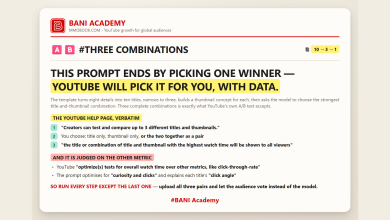
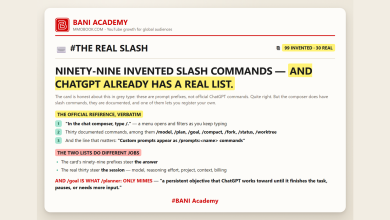
| 5 | Skills | 5 minutes | Retyping your best prompt. Build one, not twenty — the same lesson as the ninety-nine-shortcut card |
| 6 | Connectors | 5 minutes | Copy-pasting out of Gmail, Drive and Calendar. The card rates this three, and it is the one with a real privacy decision attached |
Then, and only then, the dependency question becomes answerable: which single outside thing is worth owning? If you make video, that is probably the Level 3 thumbnail route. If you live in spreadsheets, it is the Office add-in and a paid plan. If you are a developer, it is the one we have written about most — what actually loads in a .claude/ folder. The card is useful precisely here, as a menu of outside things, once you stop reading it as a ranking.
Four honest caveats
- The star ratings are the card author’s, not ours and not Anthropic’s. We did not invent a scoring system; we read the one printed on the sheet and averaged it. If you think the author under-rated Cowork’s tiles, that is an argument with the card, not with the arithmetic.
- Product surfaces are moving fast. Cowork’s shape in particular is changing — which is the point of that section, not a complaint. Everything here was read in October 2026, and a card drawn in early October was already describing a slightly different product by the time we checked it. That is normal and it is why the dependency column matters more than the level numbers.
- The plan gate on Excel and PowerPoint comes from Microsoft’s own marketplace listings for the two add-ins, which put them on the Pro, Max, Team and Enterprise plans. Guides elsewhere still quote an older, narrower preview. Check the listing for your plan rather than either.
- We did not set any of this up to time it. The “roughly” column is an estimate of how long each settings change takes, not a measurement. The order is ours, chosen so each step removes work the next step would otherwise repeat.
The one-line version
This card rates everything it lists, and then stacks those ratings in an order its own numbers do not support. Chat’s features average 3.83. Cowork’s average 3.33. The thing you are told to climb out of scores higher than the thing you are told to climb into — and the actual sequence is not skill, it is how many outside pieces you have to acquire first.
So read it as a shopping list, not a ladder. Spend twenty minutes on the rung you are already standing on, which costs nothing and is rated highest. Then buy exactly one thing from a higher rung, chosen by the job you actually do. We have written the longer version of that argument as same brain, three doors — three surfaces, three amounts of leverage, and none of them a promotion.
Do this first, it takes three minutes. Open your settings and write your audience, your format and your tone into the instructions field. Then count how many of your last ten conversations opened by explaining one of those three. That number is your actual answer to “am I stuck at Level 1”.
2 Comments